I joined researchers and volunteers from the School of Environmental and Life Sciences at the University of Newcastle Australia to observe their fieldwork for a number of nights.
I was introduced to ‘Gam’ or the Gambusia fish (mosquito fish) – 00:37min. At 06:14min, you can spot a Gambusia fish with a fungal infection.
These fish were first introduced to Australia in the 1920s, and then en masse by the Australian government during WWII to biologically control mosquito larvae. In the environment, they do not control mosquitoes anymore than native fish do, and have proliferated to become a pest across many areas of Australia. Their ability to tolerate poor water quality and live in a wide range of conditions (including high salinity and pollution) combined with their aggressive nature (fin-nipping other fish to make these more prone to infection, preying on native fish eggs, larvae, tadpoles and invertebrates) have exacerbated the decline of many native fish and frog species.
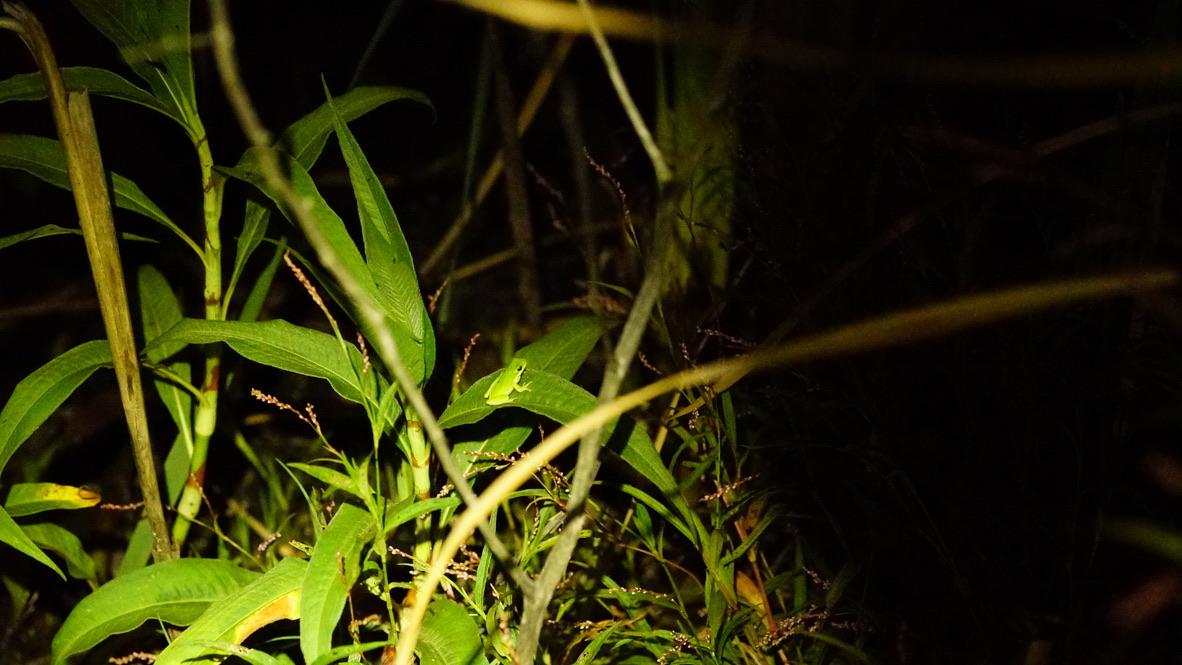
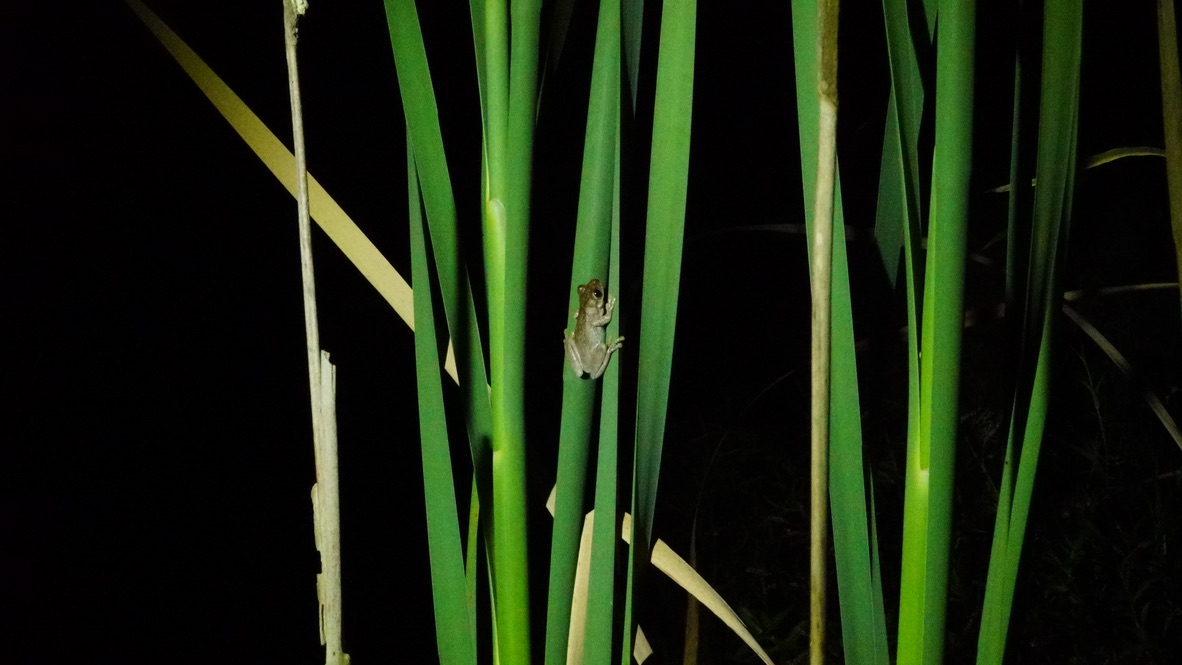
At 02:54min I spotted my first frog, a bright green Litoria fallax – Eastern Dwarf Tree Frog. You can also see a number of Litoria peronii – Peron’s Tree Frog at 03:00min and 07:46min with their distinctive yellow and brown spotted hind legs. And towards the end of this video, you see and hear a Limnodynastes peronii or Striped Marsh Frog at 07:13min.
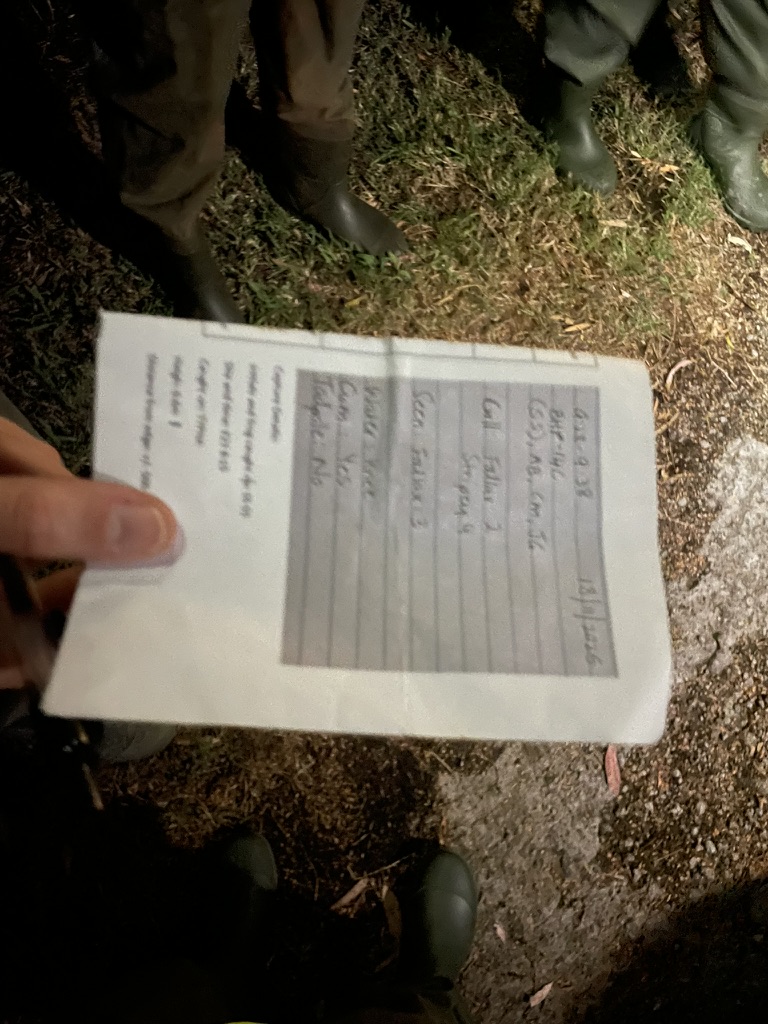
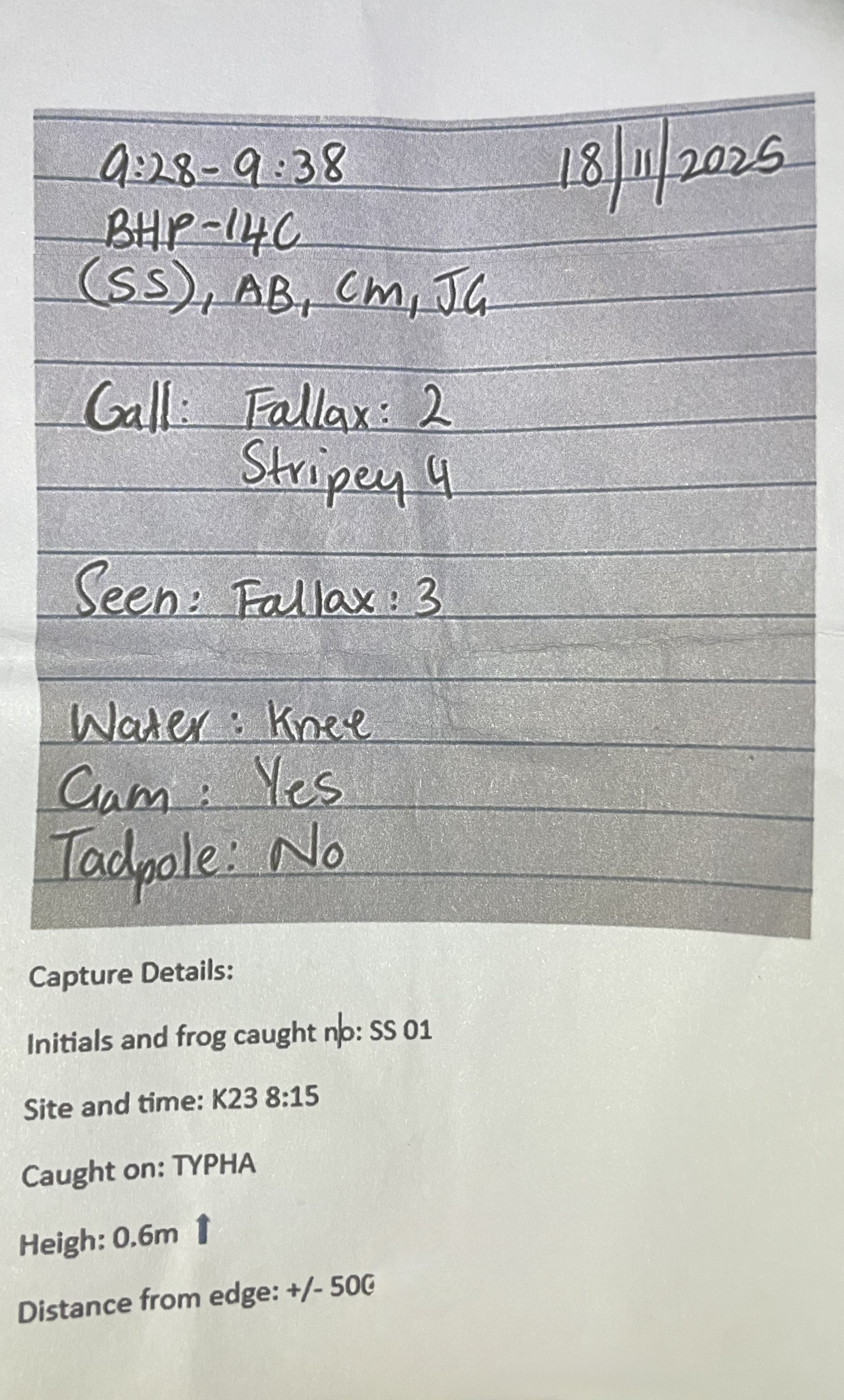
These are environmental and frog capture details that need to be recorded and kept with each frog for data collection.